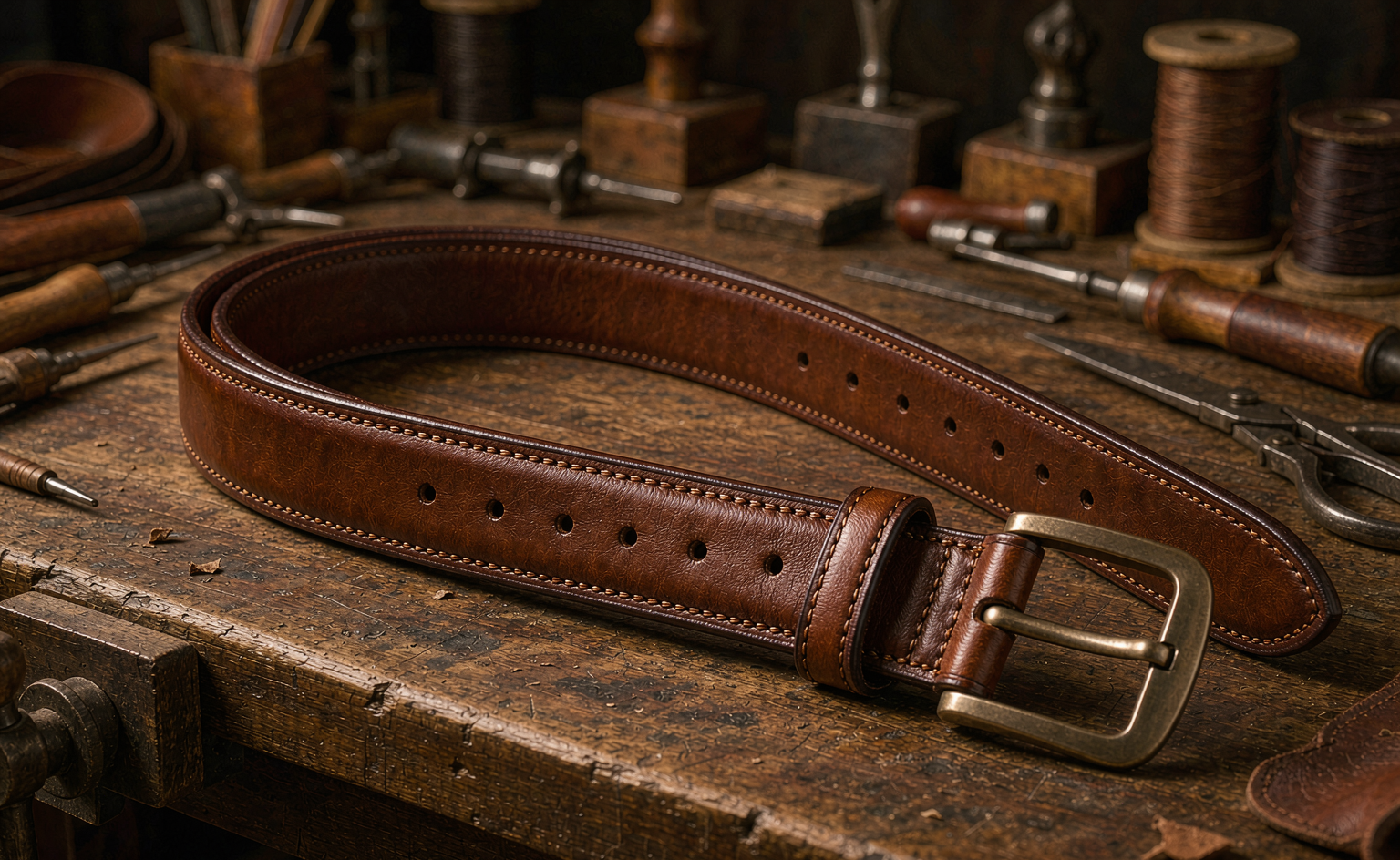
Perimeter stitching on a leather belt is not only decoration, but it is also not always structurally essential. The stitches that run along the edges hold the outer leather and the inner core together, keep the strap from stretching or separating, and slow down edge wear. Whether they matter for you depends on the belt construction, the thread, and how the belt is used. This guide explains what perimeter stitching actually does, when unstitched belts are fine, and how to judge stitching quality before you buy.
What Perimeter Stitching Does Inside a Belt
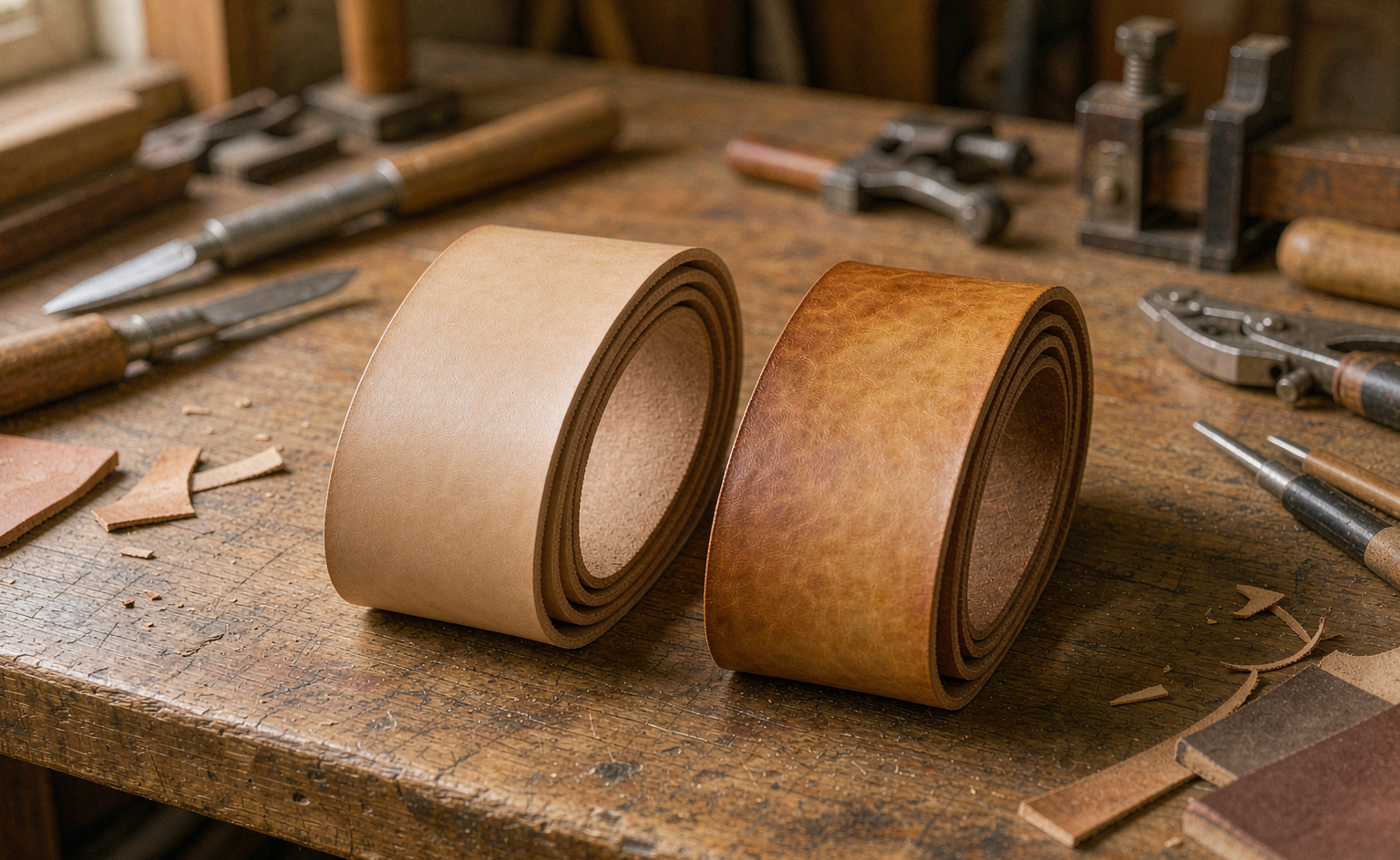
A typical leather belt is built in layers: an outer strip of leather, an inner core material that gives the belt body, and sometimes a lining on the underside. Stitching along the perimeter does three jobs in that construction:
- Locks the layers together. Unstitched belts often rely on adhesive alone, which can separate over time under repeated bending.
- Controls stretch. The thread holds the core in place so the strap returns to its original length after flexing.
- Protects the edges. Stitching prevents the leather edge from peeling or fraying where it is most exposed.
In belts that are pressed or heat-bonded without stitches, the layers can still hold for years if the adhesive and the leather quality are good. The trade-off appears under load: a stitched belt distributes stress along the seam, while an unstitched belt concentrates it in the glue line.
Stitched vs. Unstitched: Where Each Construction Works
| Construction | How the layers are held | Typical use | Main risk |
|---|---|---|---|
| Perimeter stitched | Thread seam near both edges | Dress belts, heavy-duty and work belts, gun belts | Thread wear or breakage over years |
| Unstitched (bonded) | Adhesive or heat bonding | Thin casual belts, fashion belts | Layer separation after bending |
| Stitched through core | Seam passes through all layers including core | Heavy-duty and load-bearing belts | Higher production cost |
For a belt that will be worn daily and carry load, such as a work belt or a holster belt, stitching that runs through the core is the stronger option. For a slim belt worn mostly with tailored trousers, a clean bonded edge can look sleeker and perform fine.
How to Judge Stitching Quality on a Belt
Stitching quality is visible before you buy. Check these points:
- Stitch density (SPI). Stitches per inch, or SPI, describes how tightly the thread is spaced. Finer densities are common on dress belts, coarser ones on rugged belts. What matters is consistency: spacing that stays even along the whole length.
- Thread type. Waxed polyester and nylon threads resist moisture and abrasion better than soft cotton threads on belts that see hard use.
- Seam path. The stitch line should run parallel to the edge at a consistent distance, without wandering or pulling the leather.
- Edge finish. Look at how the edge is finished next to the seam. Painted or burnished edges combined with clean stitching are the usual markers of a belt made with care.
Backstitching at the buckle end and the tip also matters: a seam that is not locked can unravel from the ends over time.
When Unstitched Construction Is the Better Choice
Unstitched belts are not automatically lower quality. A single-layer leather strap with no core does not need perimeter stitching at all, because there is nothing to hold together. Bonded construction also suits very thin, supple belts where a seam would add stiffness. The decision should be based on construction, not on the presence of stitching alone.
If a belt has no stitching but has a thick multi-layer core, ask how the layers are bonded and what the warranty or defect policy covers. Layer separation is one of the most common failure modes reported on bonded belts after months of daily flexing.
Why This Matters When Ordering Custom Belts
When you order custom belts in bulk, stitching is a specification, not an afterthought. The construction method, thread type, stitch density, and edge finish should all be written into the tech pack so every batch matches the approved sample. A factory that can show you its stitching stations and edge-finishing process is easier to evaluate than one that only describes the result. This is standard practice for manufacturers producing custom leather belts for brands, and it is worth confirming before sampling.
FAQ
Does perimeter stitching prevent a leather belt from stretching?
Yes, in multi-layer belts the stitching holds the core in place, which limits stretch and helps the strap return to its original length. The effect is strongest when the seam passes through the core rather than only through the outer layer.
Are unstitched leather belts lower quality?
Not necessarily. A single-layer strap needs no stitching, and bonded construction can be durable when the adhesive and materials are right. The risk is layer separation in multi-layer bonded belts under repeated bending.
What does SPI mean on a belt?
SPI stands for stitches per inch and describes the stitch density. Higher numbers mean finer, closer stitches, which is common on dress belts; lower numbers mean coarser stitches, often used on rugged or heavy-duty belts.
Can perimeter stitching be repaired?
A seam that has unraveled can often be re-stitched by a leather repair service if the leather and core are still intact. Thread damage alone is usually repairable; layer separation is harder to fix.
Conclusion
Perimeter stitching is functional in multi-layer belts because it locks the core, controls stretch, and protects the edges. Unstitched construction is acceptable for single-layer straps or when bonded layers are well made. When choosing, compare the construction method, thread, stitch density, and edge finish, and confirm those details in writing when ordering custom belts so the production matches the sample.
If you are developing a custom belt line and need the construction and stitch specifications confirmed before sampling, send your design or tech pack and the production team can review material, thread, and edge options for your target price.