Feathered and beveled edges are the two standard ways a leather belt edge is finished, and the choice affects how the belt looks, how it ages, and how it feels against the body. A feathered edge is skived down to a thin, tapered profile; a beveled edge is cut at an angle and rounded for a smooth, dense finish. The right option depends on the leather, the belt style, and the look the brand wants. This guide explains how each edge is made, how they compare over time, and which one fits different belt designs.
What Are Feathered and Beveled Belt Edges?
An edge treatment is the shaping and finishing applied to the cut side of a leather strap after it is split to thickness. Two terms come up most often in belt production:
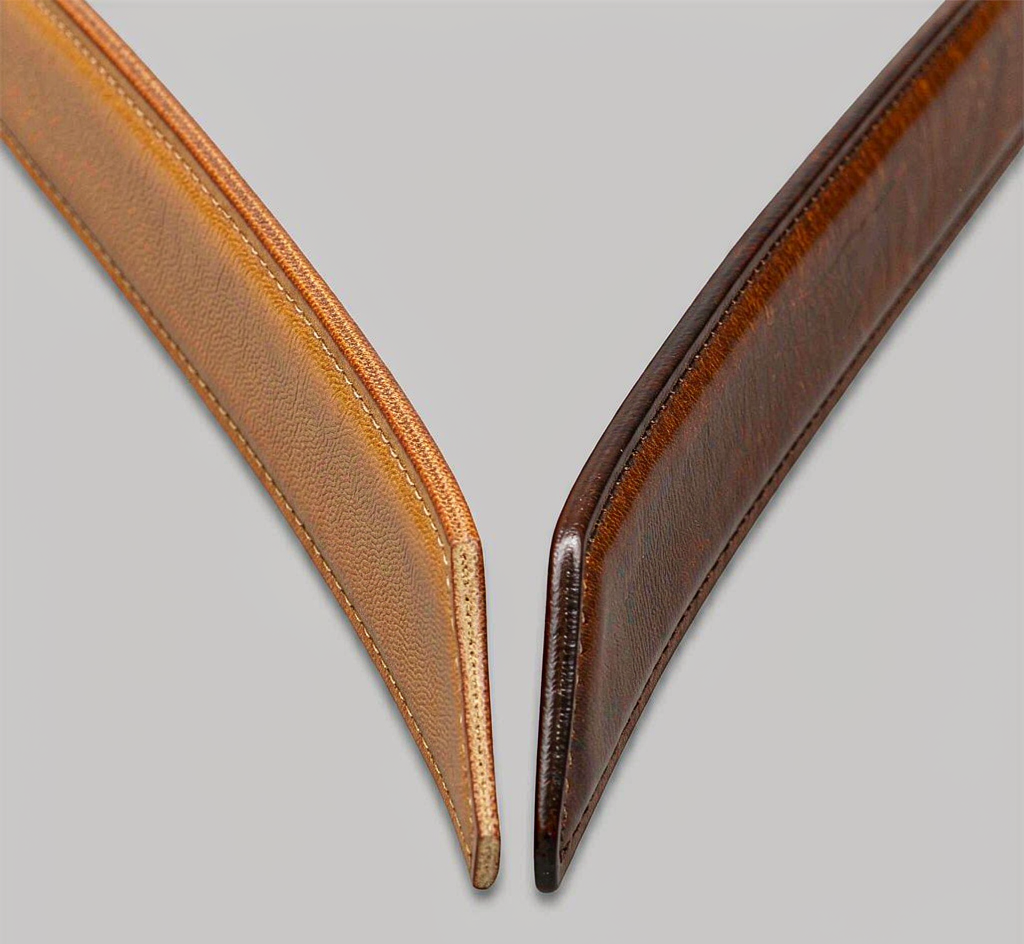
- Feathered edge — the edge is skived (shaved) from the flesh side down to a thin, tapering point, so the belt edge narrows smoothly. This is sometimes called a skived or knife-edge finish.
- Beveled edge — the corners of the strap are cut at a 45-degree angle or rounded with an edge beveler, then often burnished or painted. The result is a soft, rounded profile with a dense edge.
Both treatments exist for the same reason: a raw cut edge is square, stiff, and prone to catching on clothing. Shaping the edge first improves comfort and gives the belt a more finished appearance.
How Each Edge Is Made
The Feathered Edge Process
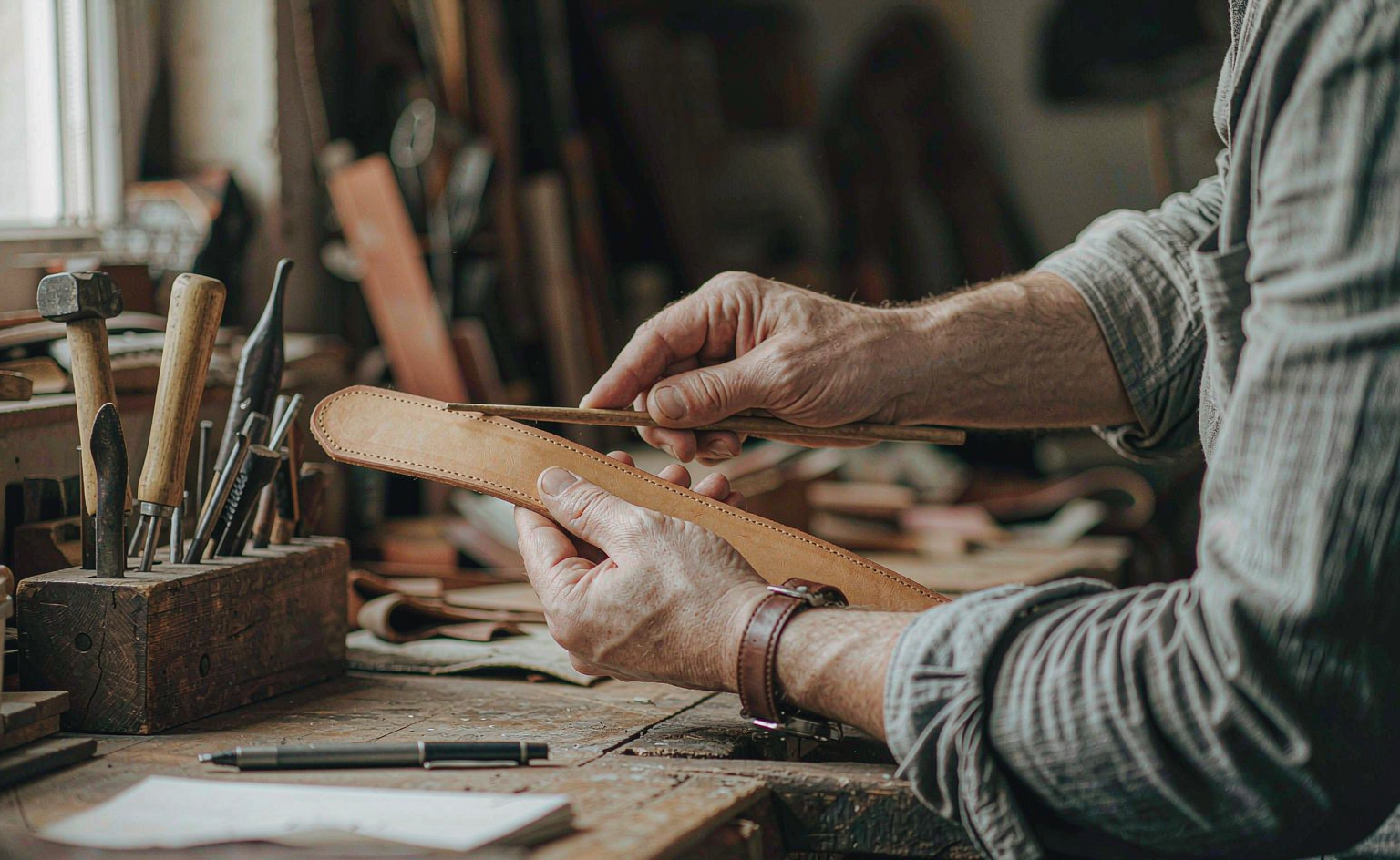
The feathered edge starts with a skiving operation. A skiving knife or a band skiving machine removes a layer of leather from the flesh side along the full length of the strap, leaving the grain side intact and the edge thin and flexible. Because the taper runs the entire length, the belt bends more easily at the edge, which is why feathered edges are common on dress belts meant to sit flat under a suit.
The Beveled Edge Process
A beveled edge is cut with an edge beveler or a leather planer that removes the two sharp corners of the strap at a controlled angle. After beveling, the edge is usually sanded, burnished with gum tragacanth or wax, and finished with edge paint or ink. The edge is then rounded and sealed, which protects the leather core from moisture and abrasion.
Feathered vs. Beveled: How They Compare
| Criterion | Feathered edge | Beveled edge |
|---|---|---|
| Profile | Thin, tapered, knife-like | Rounded, dense, soft corners |
| Feel | Flexible, almost seamless at the edge | Smooth and solid, less flexible at the edge |
| Appearance | Elegant, minimal, close-fitting | Structured, classic, substantial |
| Wear behavior | Ages with a soft, worn-in look; edge can fray sooner if the skive is too aggressive | Resists edge fraying better when burnished and sealed |
| Best suited to | Dress belts, thin straps, minimalist designs | Casual belts, heavy-duty belts, straps with thick leather |
The practical difference is a trade-off between flexibility and edge protection. Depending on the leather thickness and the belt width, the same design can be made with either finish, so the choice is driven by the intended style and use.
Which Edge Fits Which Belt Style
- Dress and formal belts — a feathered edge keeps the belt flat and discreet under trousers, which is why many classic dress belts use it.
- Casual and everyday belts — a beveled, burnished edge looks robust and withstands repeated rubbing against jeans and chinos.
- Heavy-duty and work belts — beveled edges with sealed finishing are the common choice because thick leather straps need a durable, moisture-resistant edge.
- Custom and branded lines — the edge finish is one of the details buyers specify in a tech pack, together with width, thickness, and stitching. It is a standard option on custom leather belt manufacturing, so confirm the edge treatment when requesting samples.
Questions to Ask Your Manufacturer About Edge Finishing
- Is the edge skived or beveled, and at what angle?
- Is the edge burnished, edge-painted, or left raw?
- How is the edge finish applied to the buckle-end and the tip of the belt?
- Does the edge treatment differ for split leather versus full-grain leather?
- Will you provide a sample of both finishes so we can compare them on the actual leather?
The edge finish is a visible and functional detail, so it should always be confirmed on a physical sample rather than assumed from a description.
FAQ
Is a feathered edge weaker than a beveled edge?
A feathered edge is thinner at the tip, so an aggressive skive can reduce edge durability over time. When the skive is correctly proportioned to the leather thickness, the edge remains strong for its intended use. The exact balance depends on the leather and the belt design.
Can the same belt be made with both edge styles?
Yes. Many manufacturers offer both finishes on the same leather, and brands often request samples of each before choosing. The edge style does not change the leather grade, width, or buckle, so it is primarily a design decision.
Do beveled edges need edge paint?
Not always. Beveled edges can be burnished to a sealed finish without paint, or finished with edge ink for a colored look. Edge paint adds protection and a uniform color, while a burnished edge shows the natural leather tone.