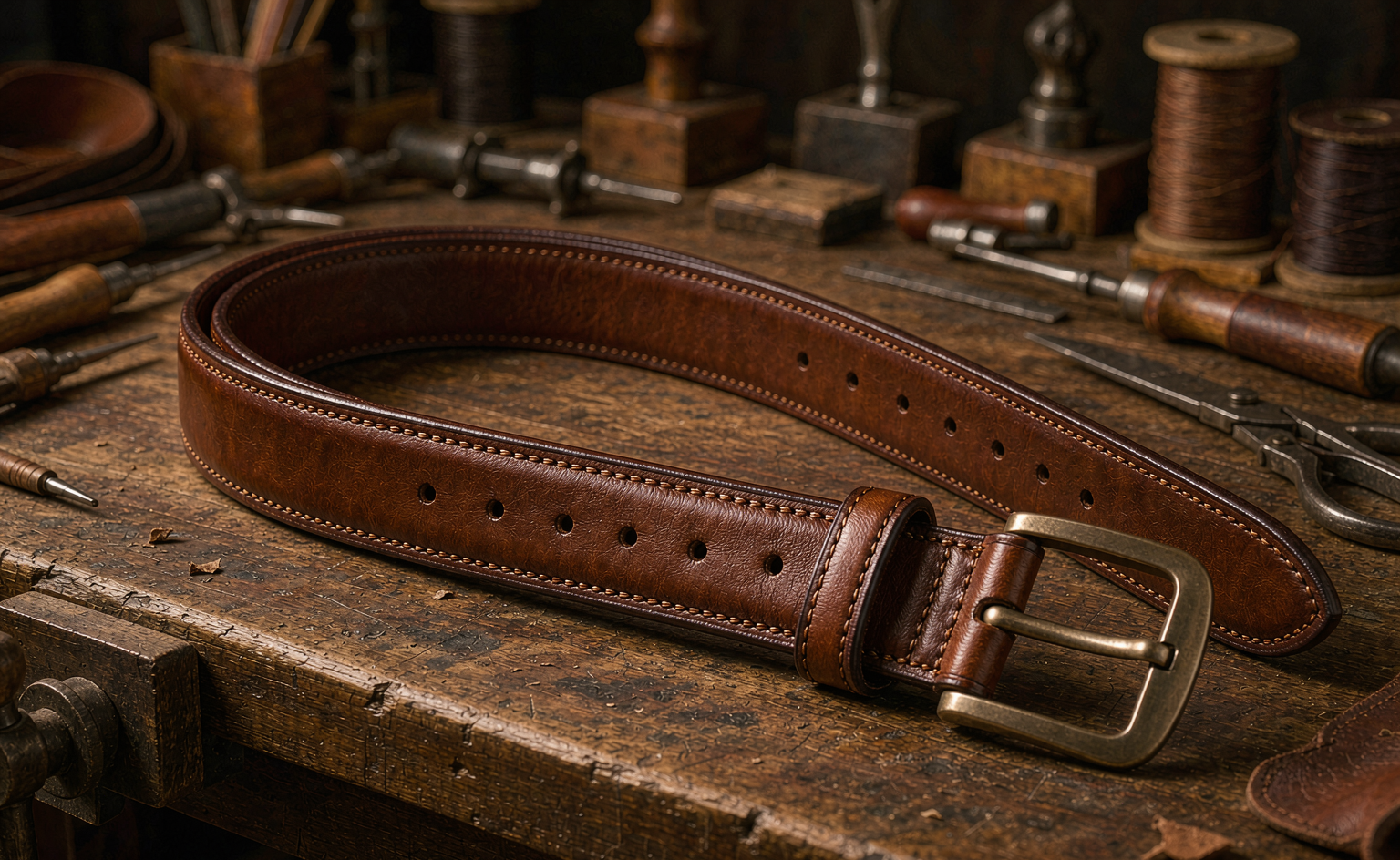
Chrome-tanned and vegetable-tanned leather can both make a durable belt, but they age in opposite directions. Chrome-tanned leather stays soft, flexible, and color-stable from the first wear, which makes it forgiving in changing weather and heavy rotation. Vegetable-tanned leather starts stiffer and needs a break-in period, yet it typically hardens into a denser, more abrasion-resistant strap over time and develops a patina that hides small scratches. For daily wear, the better material depends on whether you prioritize immediate comfort and consistency or long-term toughness and character. This guide breaks down how each tanning process changes belt performance, appearance, and cost so you can choose the right stock for your product line.
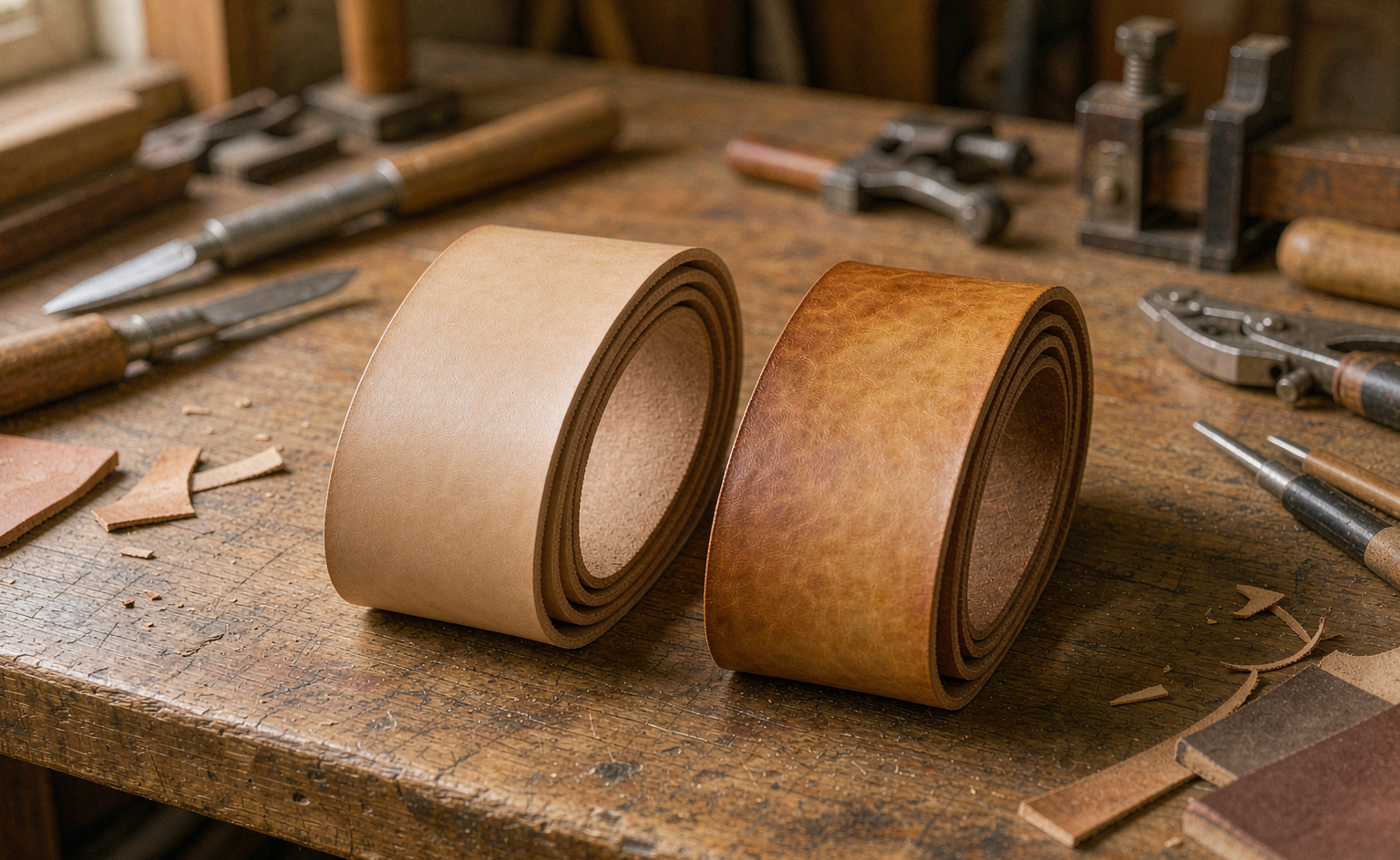
What Chrome-Tanned and Veg-Tanned Leather Actually Are
Both materials start as animal hide. The difference is the tanning agent that stabilizes the collagen fibers so the hide does not decompose.
- Chrome-tanned leather uses chromium salts, usually trivalent chromium complexes, in a process that takes one to three days. The salts bond quickly to the fibers, producing a soft, heat-resistant leather that takes dye evenly.
- Vegetable-tanned leather uses natural tannins from tree bark, leaves, and fruit extracts. The hide sits in progressively stronger tannin baths for several weeks, sometimes months. The result is a firmer, lighter-colored leather that darkens and stiffens with age.
The tanning chemistry sets the baseline for how the belt will feel, stretch, and react to water, sweat, and abrasion.
How Each Tanning Method Affects Belt Durability
Daily wear puts a belt through repeated bending, pulling, friction against belt loops, and exposure to skin oils and moisture. The tanning process determines which failure mode appears first.
Chrome-Tanned Belts Under Daily Wear
Chrome-tanned straps resist stretching in their first year because the chromium salts cross-link the fibers while keeping them supple. They also handle humidity well; the leather does not stiffen dramatically after getting damp. The main long-term risk is surface wear: the dyed finish can scuff or crack at stress points, especially near the buckle hole that is used most often.
Vegetable-Tanned Belts Under Daily Wear
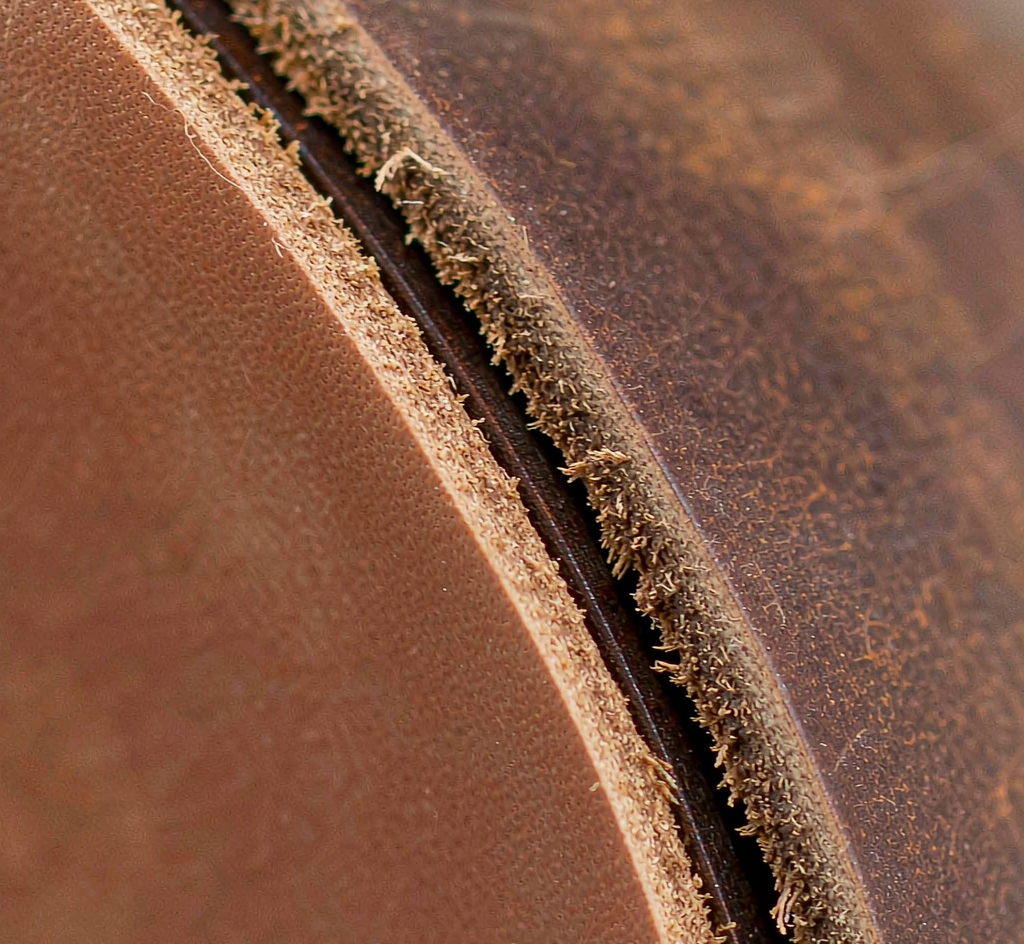
Veg-tanned leather is denser out of the tannery and can become even harder as residual tannins continue to oxidize and the fibers compact. It holds its shape under lateral stress and often outlasts chrome-tanned equivalents in pure abrasion tests. The trade-off is moisture sensitivity: if the belt gets soaked and dries too quickly, it can stiffen or warp. Regular conditioning keeps it supple.
| Factor | Chrome-Tanned Belt | Vegetable-Tanned Belt |
|---|---|---|
| Initial feel | Soft and flexible | Firm and slightly stiff |
| Stretch over time | Low initially, may increase with heavy use | Low; fibers compact with wear |
| Moisture behavior | Resists water damage; dries quickly | Absorbs water; requires conditioning |
| Abrasion resistance | Good, but finish can scuff | Excellent once broken in |
| Color stability | Color stays even for years | Develops patina; darkens with light and oils |
| Typical break-in | Minimal | A few days to a few weeks |
Appearance and Aging Over Time
Chrome-tanned belts are the safer choice if your customers want the belt to look the same on day 300 as it did on day one. The dye penetrates or coats evenly, and modern finishes resist fading from office lighting and occasional sun.
Vegetable-tanned belts change. Sunlight, skin oils, and handling darken the leather from a pale tan toward a rich caramel or brown. Small scratches can be buffed out with a dry cloth, and the surface gains a depth that many buyers associate with high-end custom leather belts. That aging is a selling point for heritage, workwear, and artisan brands, but it is a drawback for buyers who want predictable color.
Comfort and Break-In Period
A belt is only durable if the wearer actually uses it. Chrome-tanned leather feels comfortable immediately, conforms to the waist within a day or two, and stays soft in cold weather. This makes it popular for fashion belts, uniforms, and any line where comfort is the headline.
Vegetable-tanned leather can feel rigid for the first week, especially in thicker weights. Once it breaks in, it molds to the body and becomes as comfortable as chrome-tanned leather, while retaining more lateral support. For gun belts, tool belts, or heavy-duty casual belts, that extra structure is often worth the short break-in.
Cost, Lead Time, and Sustainability Considerations
Tanning time directly affects material cost and availability. Chrome tanning is fast and scalable, so chrome-tanned strap goods are usually less expensive and easier to source in large volumes. Vegetable tanning takes weeks, occupies drum capacity, and uses more raw material, so veg-tanned straps command a higher price.
Sustainability conversations usually focus on two points. Chrome tanning uses mineral salts and requires careful wastewater management; responsible tanneries recover and treat chromium to meet environmental standards. Vegetable tanning uses plant-derived tannins, but it still consumes large amounts of water and can produce organic effluent. If your brand markets environmental credentials, ask your supplier for certifications such as LWG, ISO 14001, or OEKO-TEX rather than relying on the tanning method alone.
Which One Should Your Product Line Use?
Use this decision framework to match the material to the product position.
| If your priority is… | Choose | Why |
|---|---|---|
| Low price and fast turnaround | Chrome-tanned | Lower material cost and wider availability |
| Color consistency across batches | Chrome-tanned | Dye lots stay predictable |
| Maximum long-term abrasion resistance | Vegetable-tanned | Denser fiber structure after break-in |
| Heritage look and patina marketing | Vegetable-tanned | Visible aging becomes a feature |
| Heavy load-bearing belts | Vegetable-tanned or reinforced chrome-tanned | Structure matters more than tanning type alone |
For most brands, the best approach is not to pick one tanning method for every belt. A line can use chrome-tanned leather for everyday fashion styles and vegetable-tanned leather for premium, workwear, or heritage pieces. If you are sourcing through a custom leather goods manufacturing partner, you can usually split MOQs across both materials under the same style program.
Conclusion
Neither tanning method is universally tougher. Chrome-tanned leather wins on comfort, color stability, and moisture tolerance. Vegetable-tanned leather wins on long-term fiber density, abrasion resistance, and the aesthetic story of patina. For a daily-wear belt line, the right choice depends on the customer, the price tier, and how much care the end user is likely to give the strap. If you are planning a new belt collection and want to compare swatches, send your material brief and target specifications to Beldtura Leather. We can prototype both tanning options from the same pattern so you can test wear performance before committing to a full batch.
Frequently Asked Questions
Does vegetable-tanned leather last longer than chrome-tanned leather?
It often lasts longer in abrasion and edge-wear tests, but only if it is conditioned and not repeatedly soaked. Chrome-tanned leather can last just as long in humid or low-maintenance environments.
Can chrome-tanned belts develop a patina?
Not in the same way. Chrome-tanned leather may soften and gain a slight sheen, but the color and surface stay relatively uniform. Any patina-like change is usually limited to high-friction areas.
Is chrome-tanned leather safe for skin contact?
Modern chrome tanning uses trivalent chromium, which is generally considered safe for leather goods. Reputable tanneries test for restricted substances and can provide certifications on request.
Why is vegetable-tanned leather more expensive?
The process takes weeks instead of days, uses larger quantities of plant tannins, and ties up tannery equipment. Those factors raise the material cost and limit supply.
Can one belt line mix chrome-tanned and vegetable-tanned styles?
Yes. Many brands offer a chrome-tanned entry model and a vegetable-tanned premium model using the same buckle and pattern. This gives customers a clear upgrade path without doubling design costs.